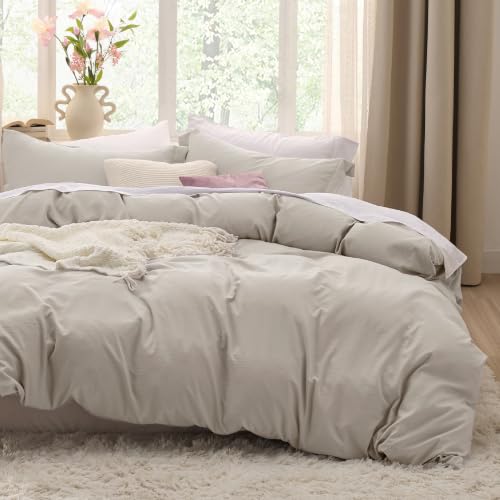
How To Choose The Right Duvet Covers In 2026
When selecting a duvet cover, choosing a size that matches the duvet is important to prevent bunching or empty spaces. Material choice affects comfort and breathability; for example, flannel or fleece can provide warmth, while percale offers breathability. Cotton and cotton blends are common options. For convenient maintenance, selecting machine-washable and dryer-safe covers is helpful. Some covers also feature corner ties or buttons to help secure the duvet in position.
Quick Answer
When choosing a duvet cover, selecting a size that matches your duvet is important to prevent bunching or empty spaces. Material choice affects comfort and breathability; for example, flannel or fleece may provide warmth, while percale offers breathability. Cotton or cotton blends are common options. For convenient maintenance, look for covers that are machine washable and dryer safe. Some covers also include corner ties or buttons to help secure the duvet in position.
Table of Contents
Our Top Picks
Affiliate disclosure: if you buy through these links, we may earn a commission at no extra cost to you.

Selecting Optimal Fabrics for Durability and Breathability
When selecting materials for a duvet cover, the choice of fabric influences long-term appearance, breathability, and durability. Natural fibers are considered optimal options. For instance, 100% stonewashed Belgian flax linen provides high tensile strength and softens over time without pilling. When considering cotton, midweight broadcloth or sateen are recommended over quilting cotton, as the latter may lack sufficient drape and is prone to uneven shrinkage between 5% and 7%. Alternatively, polyester blends should generally be avoided unless they are specifically engineered for temperature regulation, such as Outlast-infused microfiber. To manage potential shrinkage, it is advisable to pre-wash and dry fabric using the intended laundering method, such as a warm gentle cycle for cotton sateen or a low tumble dry for linen. A precise method for determining shrinkage involves cutting two 12-inch by 12-inch test swatches and marking the corners with a permanent fabric marker. After laundering these swatches identically to how the final product will be treated, remeasure them to calculate exact changes. If the width or length shrinks by specific percentages, such as 2.3% or 1.8%, those measurements should be used to adjust all pattern dimensions accordingly to ensure an accurate fit.
Calculating Accurate Dimensions and Yardage
To calculate accurate dimensions and yardage for a duvet cover, one should rely on ISO 20677:2020 standards rather than retailer labels, as standard sizes vary by manufacturer. For a Queen size, which measures 90 inches by 94 inches, the final cover dimensions might be 94 inches by 98 inches. This calculation incorporates specific allowances: 0.5 inches for side seams, 1 inch for top and bottom hems, and 4 inches of total ease for insertion. When working with 44-inch-wide fabric, two panels are necessary, each cut to a 98-inch length. This requires 5.44 yards of fabric. It is advisable to round up to 5.5 yards to account for layout inefficiencies. If using wider 58-inch-width fabric, such as Cloud9 Organic Cotton, one panel may suffice. In this case, the 98-inch length translates to 2.72 yards. To account for an error margin, one might round this to 2.75 yards plus an additional 0.125 yards, totaling 2.875 yards. These calculations ensure the finished product accommodates the necessary ease and seam allowances while managing the specific constraints of the chosen fabric width. Using these methods helps ensure the cover dimensions match the intended size while managing fabric constraints.
Designing Robust Closure Systems
Designing robust closure systems requires choosing between three primary methods: hidden zippers, button-and-loop configurations, or envelope flaps. Each approach presents different trade-offs regarding aesthetics, accessibility, and seam integrity. For a hidden zipper system, using a YKK #5 nylon coil zipper with metal stops can provide longevity. This method involves reducing the seam allowance at the opening edge by 1/2 inch. When installing with an invisible zipper foot, stitching should occur 1/16 inch from the teeth, followed by pressing the teeth flat before topstitching the outer seam. A button-and-loop system can be constructed by spacing 18mm Dritz horn buttons 4 inches apart. Loops may be made from 1/4-inch wide double-fold bias tape, attached using a 3-pass bar tack for reinforcement. While button closures are suitable for decorative contexts, they may require periodic thread replacement using high-tension thread like Gütermann Mara 70. Alternatively, an envelope flap method uses two overlapping flaps with 1/2-inch hems. Positioning the bottom flap 1 inch below the top edge allows for a 2-inch overlap. This method is often the fastest and most forgiving for beginners, whereas the zipper option may offer superior security for heavier fills.
Effective Methods for Putting on a Duvet Cover
When attempting to put on a duvet cover by yourself, you might consider the traditional method, which is a common preference for many individuals. This approach is often used when someone is looking for a standard way to manage the bedding alone. Another approach is the burrito method, also referred to as the California roll method. This technique was influenced by the preparation of sushi. In this specific process, the duvet and its cover are rolled together. This rolling technique is intended to help avoid the issue of the bedding bunching up during the application process. Both of these methods offer different ways to handle the task of covering a duvet. The traditional method is a standard way to approach the task, while the burrito method utilizes a rolling motion to manage the materials. By choosing between these two approaches, you can select the method that best suits your personal preference for handling the bedding. The burrito method specifically focuses on the rolling of the components to manage the bulk of the materials. Whether using the traditional approach or the rolling technique, these methods provide different ways to manage the process of putting on a cover.
Frequently Asked Questions
How can a duvet cover help maintain bedding cleanliness?
A duvet cover helps maintain bedding cleanliness by preventing the duvet insert from coming into contact with dirt, stains, and sweat. Using a cover allows the white insert to remain protected during use. For convenient cleaning, choosing a cover that is machine washable and dryer safe can assist in maintaining hygiene.
Why might natural fibers be preferred for duvet covers?
Natural fibers may be preferred for duvet covers because they remain optimal for bedroom use. For instance, 100% Belgian flax linen offers exceptional tensile strength and softens with each wash without pilling. Additionally, certain cotton options can be selected to provide better drape compared to other fabric types.
What is the difference between a comforter and a duvet?
A comforter is a single, patterned, or colored quilted piece designed to be used as it is. In contrast, a duvet consists of a white insert used as a fill for fluffier bedding, paired with a separate cover. The cover serves to keep the duvet clean by preventing contact with dirt, stains, and sweat.
How do different closure systems impact durability?
Different closure systems offer varying levels of security and longevity. Hidden zippers may provide superior security for heavy fills, while button-and-loop systems might require periodic thread replacement. Envelope flaps offer a fast, forgiving method without hardware. Each system presents unique trade-offs regarding seam integrity, accessibility, and mechanical stress resistance.
What is the purpose of the Burrito method?
The Burrito method, also called the California roll method, involves rolling the duvet and its cover together. This technique is intended to avoid bunching up during the process. By rolling both pieces towards the foot of the bed and then inverting the cover, the duvet can be inserted and unrolled to ensure an even fit.
When selecting a duvet cover, ensure the size matches your duvet to prevent bunching or empty spaces. Consider the material to manage comfort and breathability; for example, flannel provides warmth, while percale offers coolness. Choosing materials similar to your bed sheets can maintain consistency. Additionally, selecting machine-washable and dryer-safe options can facilitate easier cleaning.