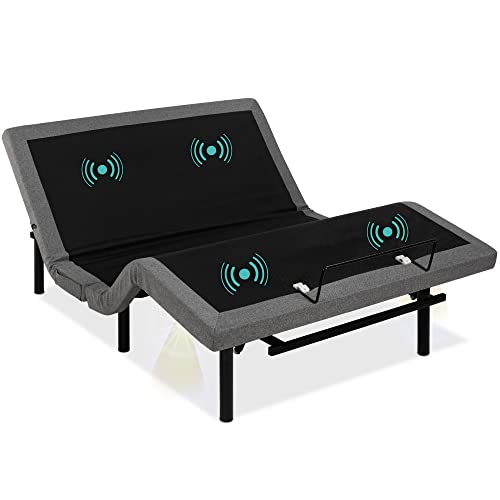
Adjustable Bed Frames Vs Weighted Blankets
When evaluating sleep enhancements, we often face a choice between structural support and sensory regulation. Adjustable bed frames and weighted blankets represent two fundamentally different approaches to sleep hygiene: one focuses on mechanical spinal alignment and mobility, while the other targets neurological calming through pressure. Deciding between them requires understanding whether your primary sleep disruption stems from physical discomfort—such as back pain or breathing issues—or from restlessness and anxiety.
This comparison is essential for anyone looking to optimize their sleep environment in 2026. If you struggle with chronic pain, sleep apnea, or mobility limitations, an adjustable bed frame may offer the physiological relief needed to achieve optimal spinal alignment. Conversely, if your goal is to mitigate restlessness through deep-touch pressure stimulation, a weighted blanket may be the more appropriate investment. Because these products serve different functions—one being a complete sleep system and the other a specialized bedding component—your choice should depend on whether you need to change your physical position or your sensory experience.
Models in this comparison
Affiliate disclosure: if you buy through these links, we may earn a commission at no extra cost to you.

Table of Contents
- Models in this comparison
- Quick Verdict
- About Adjustable Bed Frames
- About Weighted Blankets
- Primary Function: Physical Support vs. Sensory Regulation
- Body Weight and Fit Considerations
- Sleep Position and Partner Compatibility
- Who Should Choose Adjustable Bed Frames?
- Who Should Choose Weighted Blankets?
- Our Verdict
- Frequently Asked Questions
- Sources & References
Quick Verdict
Choose Adjustable Bed Frames if...
- You require customized spinal alignment to manage chronic pain, mobility issues, or sleep apnea.
- You want to adjust your sleep position for comfort or ease of getting in and out of bed.
- You share a bed and need split-version models to prevent partner disturbance during elevation.
Choose Weighted Blankets if...
- You seek the calming effects of deep-touch pressure stimulation (DTPS) to feel more settled at bedtime.
- You prefer a portable, non-mechanical solution for gentle, distributed body pressure.
- You are looking for a cost-effective way to add a grounding sensation to your existing sleep setup.
| Factor | Adjustable Bed Frames | Weighted Blankets |
|---|---|---|
| Primary Function | Customized spinal alignment and body support via motorized positioning. | Deep-touch pressure stimulation (DTPS) for a calming, grounded sensation. |
| Best For | Individuals with sleep apnea, chronic pain, or mobility issues. | Those seeking to reduce restlessness or feel more settled at bedtime. |
| Body Weight/Positioning | Allows for specific sleep positions (e.g., Zero Gravity) to ease breathing or pain. | Weight should be approximately 10% of body weight (e.g., 15-20 lbs for a 200 lb adult). |
| Key Advantage | Can assist with medical-related comfort and ease of getting in/out of bed. | Provides a non-electronic, portable way to achieve a sense of calm. |
| Main Drawback | Higher cost and more complex setup/mechanical components. | May feel too restrictive for some; heat retention can be a factor depending on fill. |
| Partner Compatibility | Split versions allow independent elevation without disturbing a partner. | Weight distribution is localized to the individual user. |
About Adjustable Bed Frames
Adjustable bed frames represent a structural approach to sleep optimization, focusing on spinal alignment and physical ease. These motorized bases allow sleepers to customize their body support by elevating the head or foot sections. For individuals managing chronic pain, mobility limitations, or conditions like sleep apnea, these frames can be transformative. By adjusting the incline, users can achieve optimal sleep positions that ease breathing or reduce pressure on specific joints. Furthermore, split versions of adjustable frames allow one partner to elevate their side without disturbing the other's position, making them a practical solution for couples with differing sleep needs.
When evaluating these frames, features such as motor noise and preset positions are critical. For example, the Amerisleep Adjustable Bed+ features a Wall Glide design, one-touch Zero Gravity presets, and an ultra-quiet motor to facilitate seamless transitions between sleep and relaxation. Because these frames change the physical geometry of the sleep surface, they are particularly beneficial for those who struggle with the process of getting in and out of bed or those who require specific postural support to manage pain throughout the night.
About Weighted Blankets
Weighted blankets offer a sensory-based approach to sleep quality through deep-touch pressure stimulation (DTPS). This mechanism provides firm but gentle pressure across the body, which may help some individuals feel calmer, less restless, or more settled at bedtime. While the evidence regarding the calming effects of DTPS is promising, it is not definitive, and these blankets should not replace medical care for conditions such as ADHD or autism. Because they apply broad, distributed pressure, the choice of materials and weight is essential for comfort and safety.
Selecting the correct weight is the most vital consideration for body weight and sleep position suitability. A common rule of thumb from SleepRanked is to select a blanket that is approximately 10 percent of one's body weight. For instance, a 150 lb adult might look for a blanket weighing between 12 to 15 lb, while a 200 lb adult might look for one weighing between 17 to 20 lb. When choosing fill materials, glass beads are often preferred because they are denser, quieter, and can be cooler than poly pellets, which are lighter and more budget-friendly but may feel bulkier. For those who sleep hot or move frequently, the breathability of the weave and the distribution of the weight will significantly impact their ability to maintain a restful sleep state.
Primary Function: Physical Support vs. Sensory Regulation
The fundamental difference between these two products lies in their physiological objective. An adjustable bed frame is a structural tool designed to manipulate spinal alignment and body positioning. By allowing users to elevate the head or feet, these frames can assist individuals struggling with sleep apnea, chronic pain, or mobility issues by achieving optimal ergonomic positions. They are particularly effective for those who need to ease the process of getting in and out of bed or those who require specific postural support to manage breathing or circulation.
In contrast, a weighted blanket is a sensory tool designed for psychological and neurological comfort through deep-touch pressure stimulation (DTPS). Rather than changing the physical geometry of your sleep surface, the blanket applies firm but gentle pressure across the body to help some users feel calmer and less restless. While an adjustable bed addresses the mechanical needs of the body—such as pressure relief through positioning—the weighted blanket addresses the nervous system's need for grounding. Because they serve different purposes, the choice depends on whether your primary sleep disruption is physical/structural or sensory/anxiety-based.
Body Weight and Fit Considerations
When evaluating these products, body weight plays a vastly different role in each. For weighted blankets, weight is the primary variable of the product itself. A common rule of thumb from SleepRanked is to select a blanket that is approximately 10 percent of one's body weight. For example, a 150 lb adult might look for a blanket weighing between 12 to 15 lbs, while a 200 lb adult might look for 17 to 20 lbs. Choosing the wrong weight can lead to insufficient pressure or, conversely, a blanket that feels too restrictive or heavy for the user to move comfortably.
For adjustable bed frames, weight considerations shift toward the structural integrity of the frame and the mattress it supports. While the frame must be robust enough to handle the combined weight of the sleeper and the mattress, the "weight" factor is more about how the frame distributes that load to prevent sagging. While a weighted blanket's effectiveness is tied to the user's mass, an adjustable bed's effectiveness is tied to how it supports the user's mass to alleviate pressure points. For those with higher body weight, an adjustable bed may provide more significant relief for joint pressure, whereas a weighted blanket must be carefully scaled to ensure it remains comfortable and safe.
Sleep Position and Partner Compatibility
The impact on sleep position is where these two products diverge most sharply. Adjustable bed frames offer dynamic positioning; they allow for side-sleeping, back-sleeping, or even "zero gravity" presets to reduce pressure on the lower back and joints. For couples, split versions of adjustable frames are a vital feature, as they allow one sleeper to elevate their side without disturbing the position or comfort of their partner. This makes them a highly customizable solution for dual-occupancy bedrooms where partners have different medical or comfort needs.
Weighted blankets are generally more static. While they can be used in various positions, they are primarily designed for those who sleep on their back or side. Because the weight is distributed across the body, heavy blankets can sometimes make frequent position changes difficult for those who move a lot during the night. Unlike the split-king functionality of an adjustable bed, a single weighted blanket is a personal item. If both partners require the benefits of a weighted blanket, two separate blankets would be necessary to ensure each person has the appropriate weight-to-body ratio and to prevent one partner from being overwhelmed by the other's weight.
Who Should Choose Adjustable Bed Frames?
An adjustable bed frame is a structural solution designed to alter the physical geometry of your sleep environment. This is the superior choice for individuals whose sleep quality is compromised by physical positioning requirements or mobility challenges. If you suffer from sleep apnea, you may find that elevating the head of the bed helps manage breathing, while those with chronic back pain or mobility issues can use the motorized lift to ease the process of getting in and out of bed or to achieve optimal spinal alignment.
This option is particularly beneficial for those who require customized body support to alleviate pressure points. For couples, split versions of adjustable bed frames offer a significant advantage, allowing one sleeper to elevate their side for therapeutic purposes without disturbing the position of their partner. If your primary sleep disruption is physical—related to pain, breathing, or movement—an adjustable frame provides the mechanical support necessary to facilitate rest.
Who Should Choose Weighted Blankets?
A weighted blanket is a sensory-focused solution designed to influence the nervous system through deep-touch pressure stimulation (DTPS). This choice is ideal for individuals who struggle with restlessness, anxiety, or difficulty settling into sleep. The firm but gentle pressure can help some sleepers feel calmer and more grounded. When selecting a blanket, it is vital to consider your body weight; a common rule of thumb from SleepRanked is to select a weight approximately 10 percent of your body weight (for example, a 150 lb adult might look for a 12 to 15 lb blanket).
Weighted blankets are best suited for those who do not require structural changes to their bed but instead need help with sensory regulation. Because the effectiveness of DTPS can vary, this is a great option for those who prefer a "grounding" sensation to quiet a restless mind. However, it is important to note that while these blankets may help some feel more settled, they should not replace medical care for conditions such as ADHD or autism. If you are a side sleeper or a hot sleeper, consider the fill material: glass beads are often denser, quieter, and cooler than poly pellets, making them a preferred choice for temperature regulation.
Our Verdict
Choosing between an adjustable bed frame and a weighted blanket depends entirely on whether your primary sleep disruption is physiological or sensory. Because these products serve different functions—one managing spinal alignment and the other managing nervous system regulation—they are not direct substitutes for one another. However, they can be used together to create a comprehensive sleep environment.
Buy an adjustable bed frame if: Your primary goal is managing physical health issues such as sleep apnea, chronic back pain, or mobility limitations. These frames allow you to achieve optimal spinal alignment and can ease the process of getting in and out of bed. If you share a bed with a partner, look for split versions to ensure one person can elevate their side without disturbing the other. This is a structural investment in your sleep ergonomics.
Buy a weighted blanket if: Your primary goal is calming a restless mind or body through sensory input. If you struggle with feeling "settled" at bedtime, the deep-touch pressure stimulation (DTPS) provided by a weighted blanket may help you feel more grounded. When selecting, remember the 10 percent rule: aim for a weight approximately 10 percent of your body weight (for example, a 150 lb adult might look for 12 to 15 lbs) to ensure the pressure is comforting rather than restrictive. For those who sleep hot, prioritize blankets with glass bead fills, as they are often cooler and more breathable than poly pellets.
The Bottom Line: If you need to change how your body is positioned to breathe or ease pain, prioritize the adjustable bed frame. If you need to change how your body feels emotionally or sensorially to fall asleep, prioritize the weighted blanket.
Frequently Asked Questions
How do I choose the right weight for a weighted blanket?
A common rule of thumb is to select a blanket that is approximately 10 percent of your own body weight. For example, according to SleepRanked, a 150 lb adult might look for a blanket weighing between 12 to 15 lb, while a 200 lb adult might look for one weighing between 17 to 20 lb. Because individual preferences vary, you may want to choose a slightly lighter option if you prefer less restriction or tend to sleep hot.
Can an adjustable bed frame help with sleep apnea or snoring?
Yes. For individuals struggling with sleep apnea or snoring, motorized adjustable beds can be highly beneficial. By allowing you to raise the head of the bed, these frames help achieve optimal sleep positions that can ease breathing difficulties and provide customized body support to manage chronic pain or mobility issues.
What is the difference between glass beads and poly pellets in weighted blankets?
The choice involves a tradeoff between weight distribution, cost, and breathability. Glass beads are typically denser, quieter, and can be cooler because they require less bulk to achieve the desired weight. Poly pellets are often cheaper and lighter but may feel bulkier and can shift more over time.
Will an adjustable bed disturb my partner during the night?
Not necessarily. Many adjustable bed frames come in split versions, which allow one sleeper to elevate their side of the bed without disturbing the position or comfort of their partner. This makes them a practical solution for couples with different sleep needs or medical requirements.
Are weighted blankets a medical treatment for ADHD or autism?
While the evidence regarding weighted blankets is promising—with some studies suggesting they may help adults feel calmer or sleep more steadily—they should not be used as a replacement for professional medical or behavioral care for conditions such as ADHD or autism.