

Best Sleep Trackers For Labor Day 2026
🏆 Top Picks at a Glance
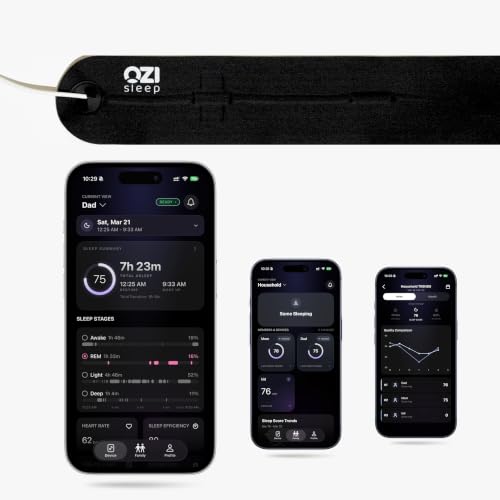 #1
Product listing
OZI Smart Sleep Tracker, Non-Wearable Contactless Under-Sheet Sleep Monitor
Check Price
 #2
Product listing
Nanny Daily Log: All-In-One Daily Routine Tracker For Babies & Toddlers: Feed, Sleep, Diapers, Activities & Notes (Baby Activity Tracker, Nanny Organizer)
Check Price
 #3
Product listing
EnergyPort Fitness Tracker & Smart Watch with 60-Day Battery & 2 Bands
Check Price
The best sleep-tracking approach is the one that matches how you actually sleep: passively under the sheet or on your wrist. This Labor Day 2026 roundup compares the contactless OZI Smart Sleep Tracker and the EnergyPort Fitness Tracker by monitoring style, comfort, and usefulness. It also notes that Nanny Daily Log is a manual caregiver record-keeping tool, not a sleep tracker. Consumer sleep data can help identify patterns, but it is not a diagnosis. We’ll also cover sleep-position comfort, body-weight considerations for under-mattress sensors, and when clinical evaluation matters more than any consumer device.
⚡ Quick Answer: Best Sleep Trackers
Best Contactless Sleep Tracking: OZI Smart Sleep Tracker, Non-Wearable Contactless Under-Sheet Sleep Monitor
$199.0 — Check Price
Table of Contents
Main Points
- Choose the monitoring style first: OZI is designed for passive, contactless under-sheet monitoring; EnergyPort is a wrist-worn option with a stated 60-day battery and two bands; Nanny Daily Log is a manual organizer for recording a baby’s or toddler’s routines rather than automatically measuring sleep, so it is not a direct alternative for adult sleep tracking.
- Use sleep-versus-wake trends as general reference points rather than treating consumer-tracker results as precise sleep-stage measurements. Different devices and tracking methods can produce different results, so avoid relying on a single score as a clinical measurement.
- For sleep comfort, OZI avoids having a device on the wrist, which may suit people who dislike wrist pressure. EnergyPort’s suitability depends more on band fit and personal tolerance; use a secure, nonrestrictive fit that does not leave pressure marks or disturb movement.
- Consider mattress and body-weight variables before choosing an under-sheet sensor. OZI’s passive placement can be appealing for users who do not want to wear technology, but mattress construction, toppers, body weight, and sleeping position may affect detection, so verify compatibility before purchase.
- These products serve different purposes: OZI and EnergyPort are intended for automatic sleep-related tracking, while Nanny Daily Log is for manually recording baby and toddler care routines. Choose Nanny Daily Log only if you need a caregiver record rather than a sleep-monitoring device.
- Do not use any of these products to diagnose or treat sleep apnea. Anyone with diagnosed or suspected sleep apnea should seek professional evaluation rather than relying on a consumer tracker or manual log.
Our Top Picks
Affiliate disclosure: if you buy through these links, we may earn a commission at no extra cost to you.
Factors to Consider
Frequently Asked Questions
Are sleep trackers accurate?
Consumer sleep trackers are generally better at estimating sleep versus wake than at classifying specific sleep stages. Accuracy varies by device, fit, sensor type, and sleep conditions, so use the results as general estimates and look for patterns over time rather than treating them as clinical measurements.
Do sleep trackers accurately measure REM and deep sleep?
They provide estimates, not clinical measurements. Sleep-stage results can help you observe broad trends over time, but consumer trackers may have difficulty distinguishing among individual sleep stages and do not match polysomnography (PSG).
Are smart rings better than wrist wearables for sleep tracking?
Smart rings can be a comfortable, low-profile option for people who dislike sleeping in a watch, including many side sleepers. Neither form factor is universally better; actual performance varies by device, fit, user, and sleep conditions.
What is the best sleep tracker for HRV and recovery?
A device that explicitly supports overnight heart-rate and HRV tracking may be suitable for recovery and fitness integration. Compare HRV trends under similar conditions rather than reacting to one unusually high or low reading, and check the device’s stated features before buying.
Can I track sleep without wearing a watch or ring?
Yes. Under-mattress sensors can passively estimate measures such as total sleep time, while bedside monitors track without physical contact. Their results may vary with mattress construction, mattress thickness, body weight, sleep position, room setup, and movement, so check compatibility before buying.
How can I use a sleep tracker without increasing sleep anxiety?
Review the data once or twice a day and focus on weekly patterns instead of trying to optimize every sleep-stage score. Disable nonessential alerts, avoid treating a poor score as a diagnosis, and prioritize how rested you feel alongside the device’s estimates.
Can a sleep tracker diagnose sleep apnea?
No. Consumer trackers cannot replace clinical evaluation or treatments such as CPAP, BiPAP, or oral appliances for diagnosed or suspected sleep apnea. If you snore loudly, gasp or stop breathing during sleep, or experience persistent daytime sleepiness, speak with a healthcare professional about appropriate testing.
Conclusion
The best sleep tracker for Labor Day 2026 depends on your priority: choose a wearable for broad activity and health-related data or an under-sheet sensor for passive monitoring. Whichever format you choose, use its readings to identify personal trends rather than diagnose sleep stages or sleep disorders, and seek clinical care when symptoms suggest sleep apnea.


